Programmes & initiatives

Four named programmes, kept small enough to walk between.

The deed of gift is wide; the parish is narrow. Within those two limits we run four standing programmes, each named after a habit the trustees have kept for years.

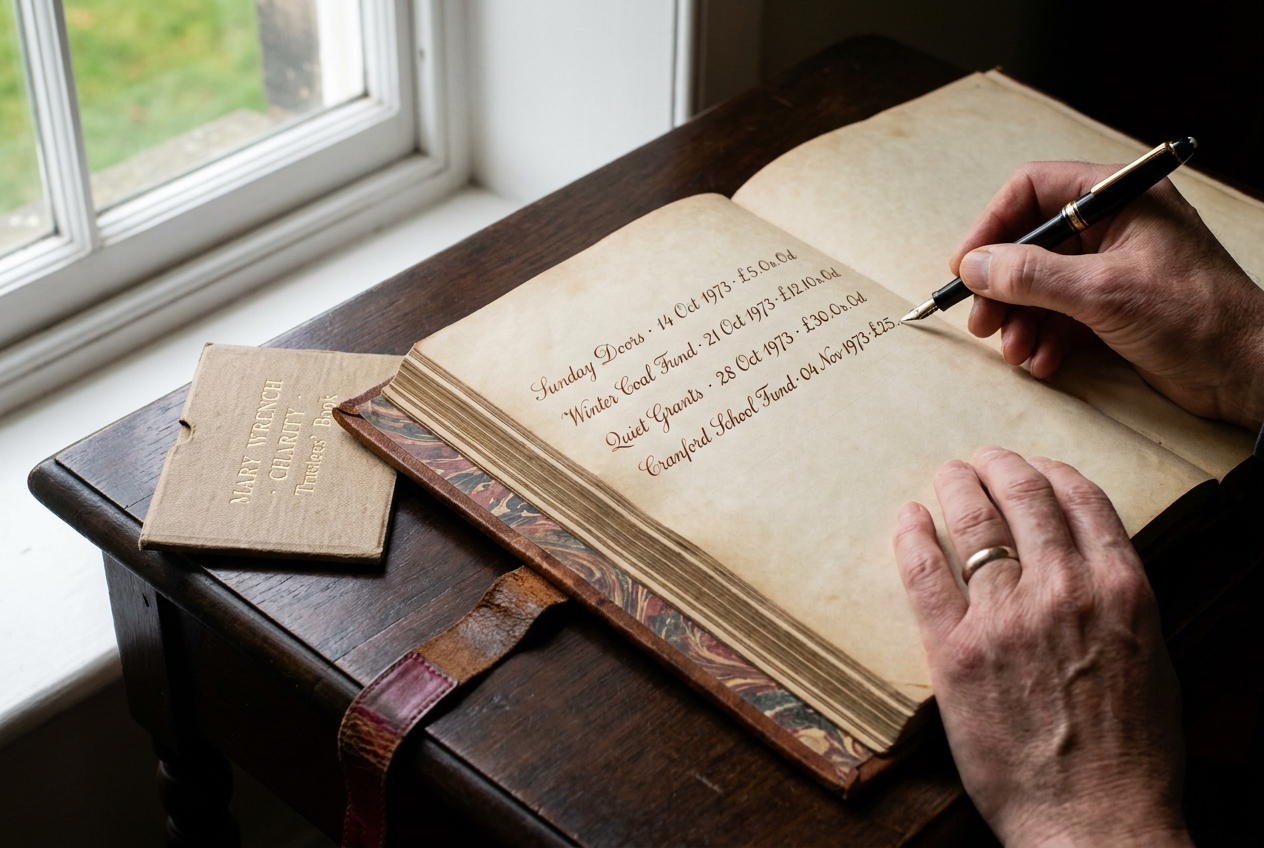
The parish ledger lies open on the trustees' desk, four programmes listed in copperplate fountain pen — Sunday Doors, Winter Coal Fund, Quiet Grants, Cranford School Fund.
Programme · I · since 2014 (named); informal habit since 1830s

Sunday Doors

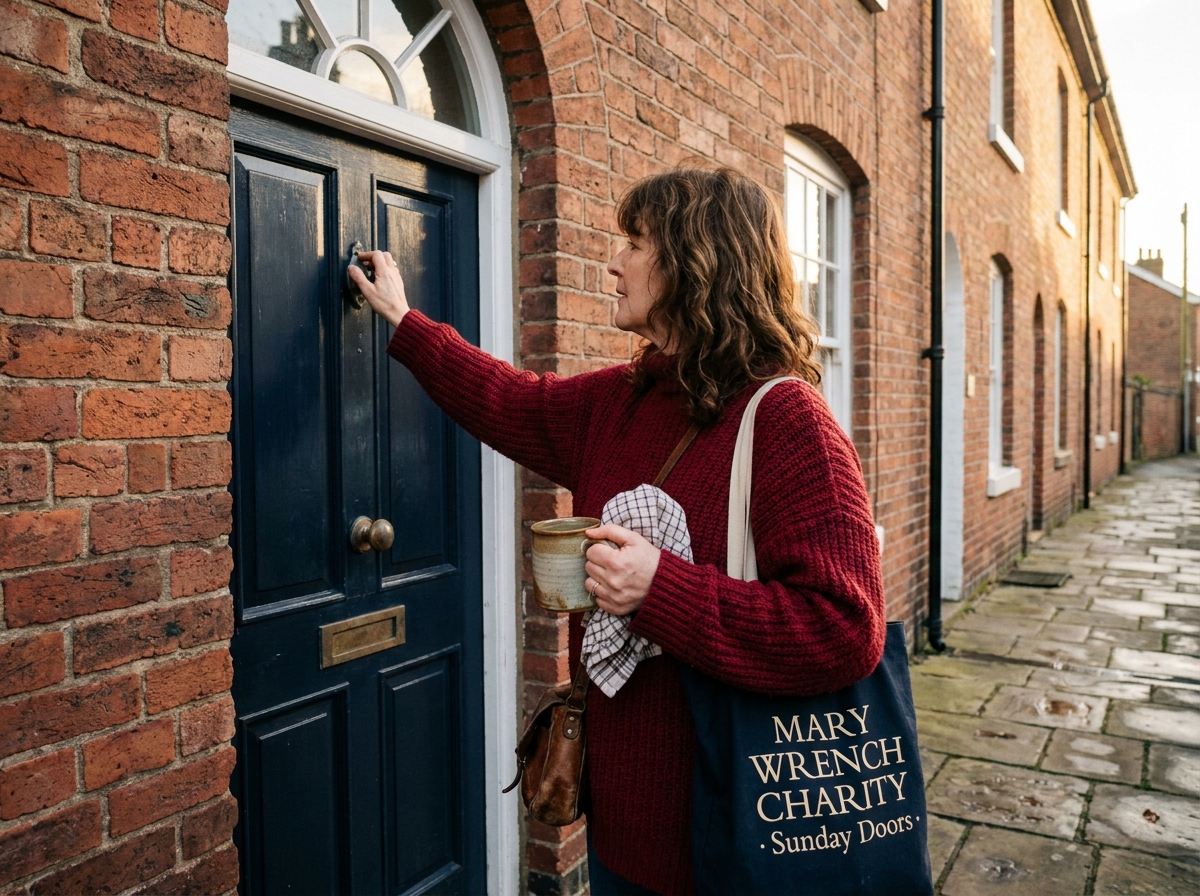
A befriender on the doorstep of a Knutsford terrace, holding a tote bag stitched 'Mary Wrench Charity · Sunday Doors'.

The Sunday Doors round is the simplest and oldest of our standing habits: a fortnightly call on older neighbours who have asked to be called on. A befriender — usually one of a small circle of about a dozen — walks to a kitchen, brings the kettle to the boil if it is not already, and stays for thirty or forty minutes. We bring nothing else. The visit is the gift.

Households are nominated to us by St John's parish office, by the district nurses, by the Sheltered Housing officer at Cherry Tree Court, by neighbours, and occasionally by a Cranford School parent who has watched a grandmother grow lonelier. Every nomination is read at the next trustees' meeting, and the household is then visited once by a trustee before being added to the round.

The visit roster is published on a single sheet of paper, pinned to the cork-board in the parish office at St John's, and refreshed each February. There are at present 31 households on the round, broadly evenly split across Tatton Street, Princess Street, Manor Park, Mobberley Road and the cottages above the Lily Pool. Each befriender holds two or three households, never more.

Beneficiary type: older residents living alone within the parish, of any faith or none.
Geography: the ancient parish of Nether Knutsford (broadly WA16 within Knutsford town).
Supported by: the parish office of St John the Baptist, Knutsford.
Programme · II · since 1923

Winter Coal Fund

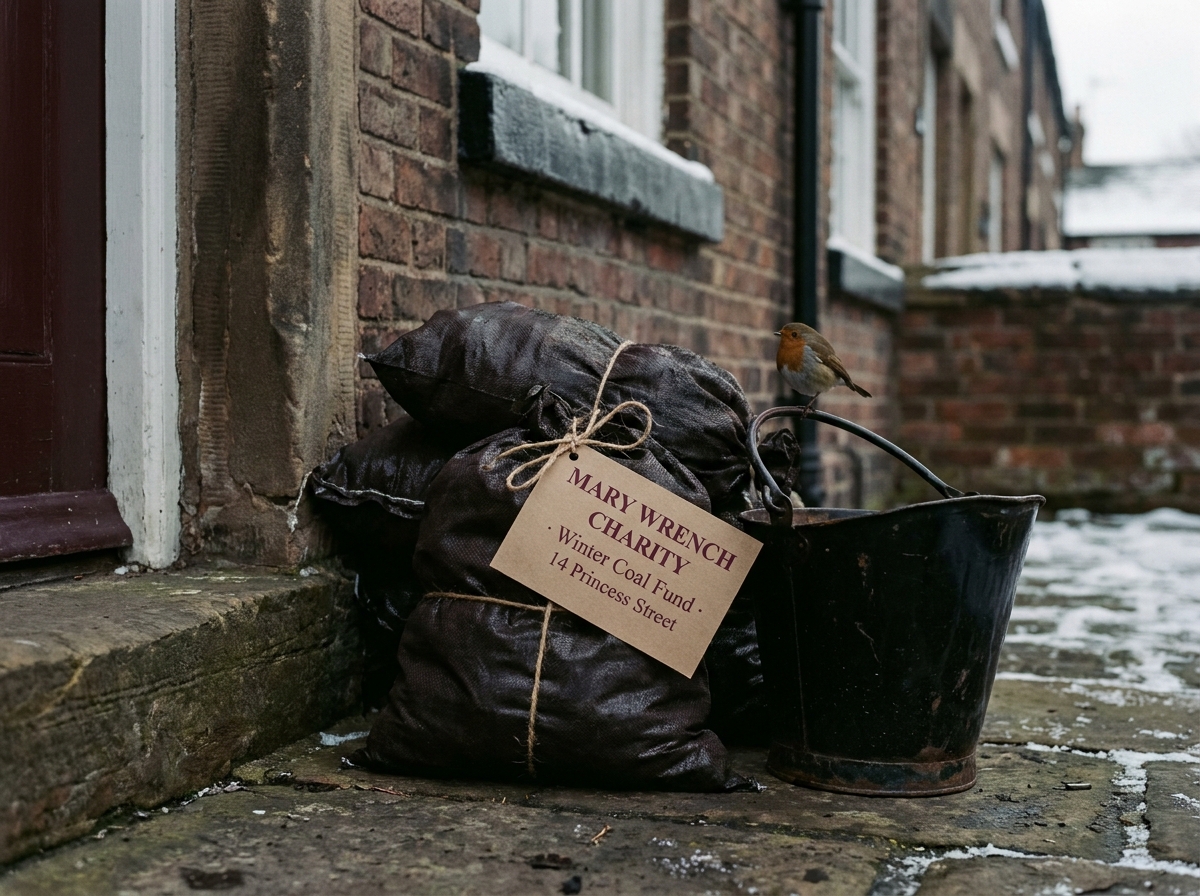
Bagged smokeless fuel beside a back doorstep with a hand-tied brown-paper label reading 'Mary Wrench Charity · Winter Coal Fund · 14 Princess Street'.

The Winter Coal Fund was first opened in January 1923, after an exceptionally cold spell froze the pipes along Tatton Street and the trustees of the day spent a panicked fortnight pulling together the price of fifteen bags of coal. The trustees' minute of 4 February 1923 reads, in spidery ink, 'It is decided to set aside hereafter a sum every November against the coming winter, that we may not be again in such a difficulty.' We have kept that sub-fund every year since, with two breaks — the winter of 1944 and the winter of 1947, both of which we still find unsettling.

The Coal Fund covers what its name describes — solid fuel deliveries — but has, over the years, also stretched to oil top-ups for older boilers, three or four emergency boiler call-outs each winter, electricity meter top-ups for households on prepayment, and the occasional new kettle. The decision on what counts as 'within the Coal Fund' is taken by the trustees at the November meeting and minuted.

Last winter, 2024-25, the Coal Fund made nine deliveries totalling £1,180. The largest single distribution was a £240 plumber's call-out on a boiler that had failed in the third week of January. The smallest was a £14 electricity meter top-up.

Beneficiary type: households within the parish whose heating costs have outstripped their income.
Geography: the ancient parish of Nether Knutsford.
Supported by: the annual carol-service offertory at St John the Baptist, Knutsford; the open garden weekend on Tatton Street; and the parishioners of St John's.


Programme · III · since 1830 in some form

Quiet Grants

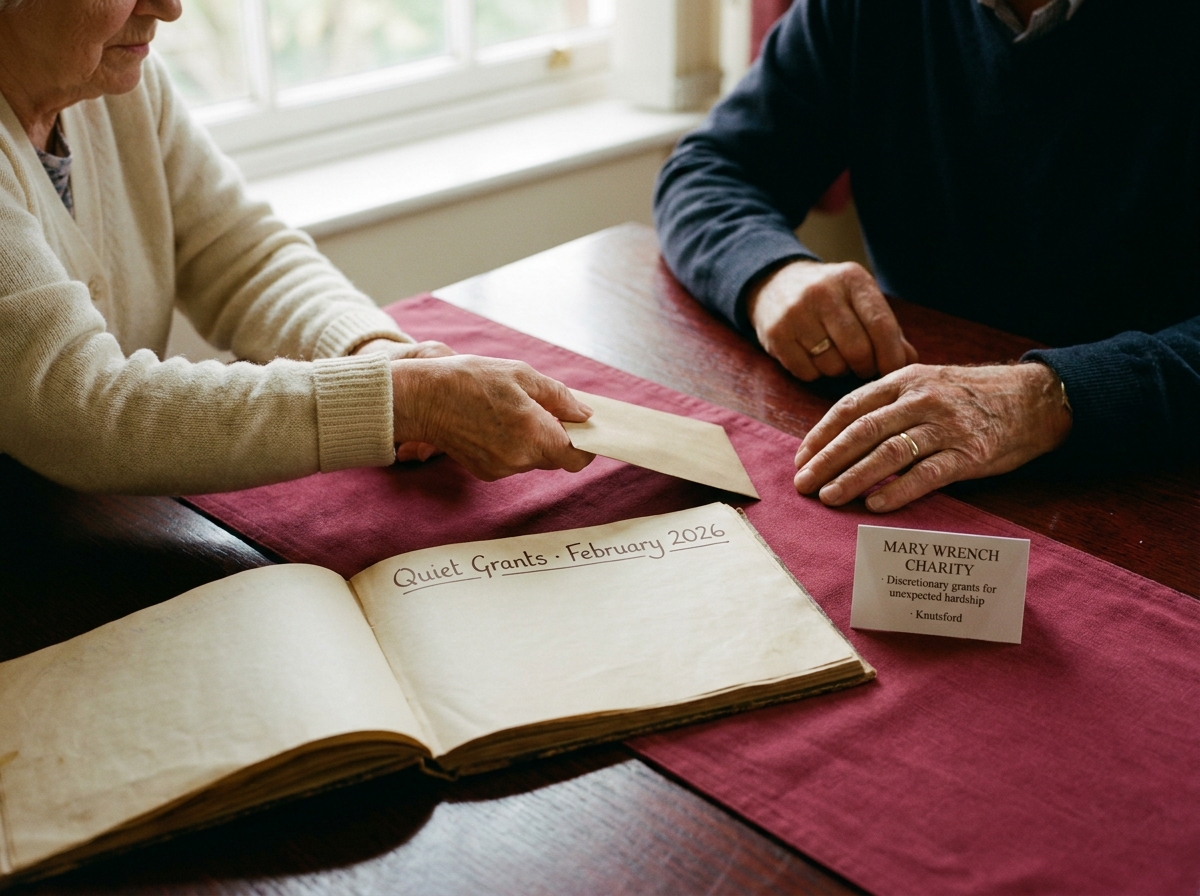
A hand slides a small unmarked envelope across the parish-room table beside an open ledger headed 'Quiet Grants · February 2026'.

The Quiet Grants are the trust's catch-all for the small unforeseen — a fridge that has stopped, a kettle that has finally given up, a child's school shoes worn through in October, a bus fare to a hospital appointment in Macclesfield, the deposit on a replacement washing machine. They are agreed between trustees, on the basis of a short visit, and paid out in cash or by bank transfer within the working week.

We try to keep the average grant somewhere between £40 and £180. The largest single Quiet Grant in 2024-25 was £240 — to a self-employed joiner whose van clutch had failed and who needed his tools back on the road. The smallest was £14, a rail ticket to a funeral in Lancaster.

The Quiet Grants are not advertised in any wider way; we work largely from referrals through Sunday Doors, the school, the parish office, and the GP surgery on Toft Road. We have, on perhaps a dozen occasions over the last few years, also responded to a hand-written note slipped under the rear vestry door — and the trustees have a small understanding that any such note is read with at least the same seriousness as a formal referral.

Beneficiary type: any household within the parish facing an unforeseen short-term hardship.
Geography: the ancient parish of Nether Knutsford.
Supported by: the trustees' own giving, individual donations, and the small annual endowment dividend.


Programme · IV · since 1982

Cranford School Fund

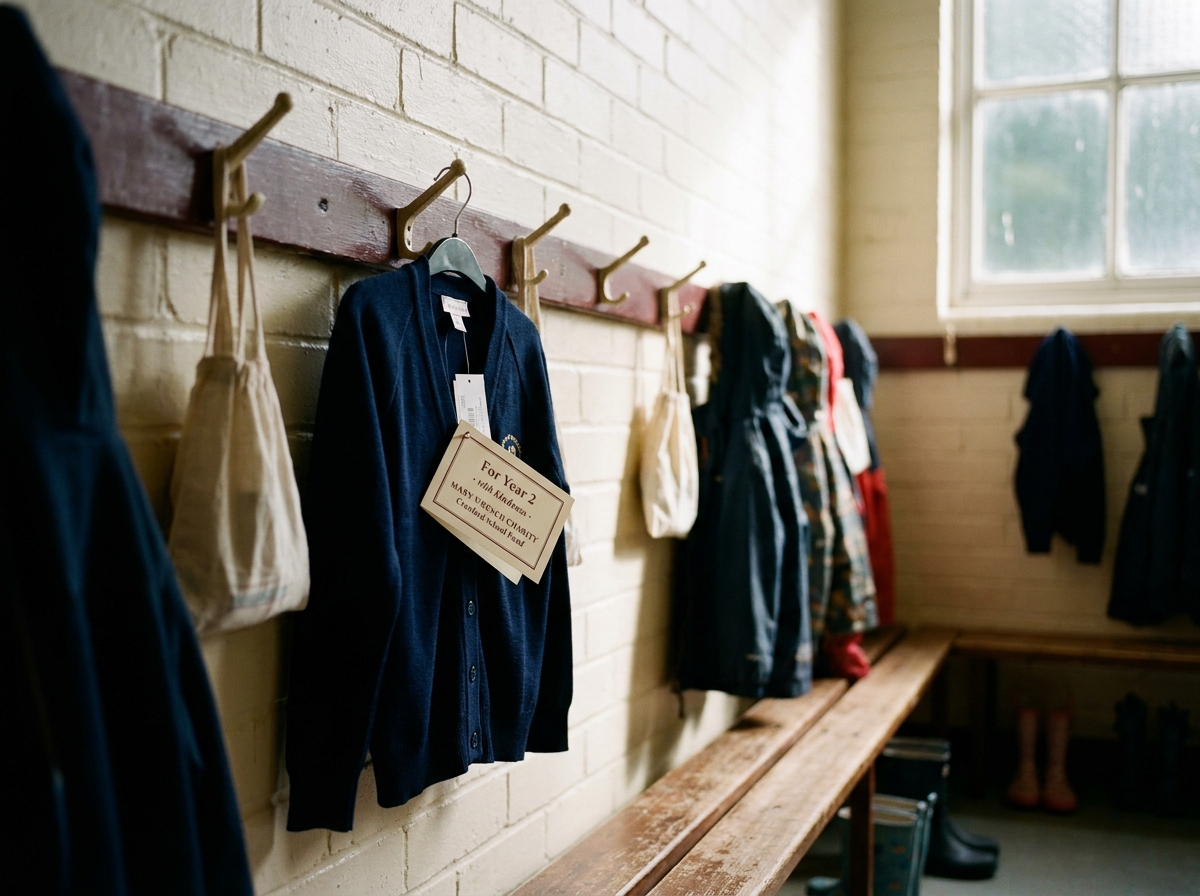
A new navy school cardigan hangs on a peg in a Knutsford primary-school cloakroom with a card pinned 'For Year 2 · with kindness · Mary Wrench Charity'.

The Cranford School Fund is the only standing institutional grant the trust makes. It is a single annual award to the local Church of England primary school — Cranford C of E Primary, just off Mobberley Road — for the discreet help of families through the year. The school decides, through its pastoral team, how the fund is spent: most years, this is new uniform parcels for Reception in September, a small set of winter coats in November, and the occasional pair of school shoes mid-year.

The trustees grant £400 each autumn, paid in a single transfer. The school accounts back to us in May with a one-page summary of what was bought and roughly how many families were helped, without naming any household. No child is identified as a recipient by name to the trust; the school holds that information confidentially.

The fund is named for the school's link to Elizabeth Gaskell's novel and for the school's own informal motto, 'with kindness'. It is the most modern of our programmes — established in 1982 after a particularly hard year for families on the new estates south of Mobberley Road — and it is also the most regularly used line in our cashbook.

Beneficiary type: families with children at Cranford C of E Primary within the parish.
Geography: the ancient parish of Nether Knutsford.
Supported by: Cranford C of E Primary School, Knutsford.

Help one of the four

A small gift, given today, will be spent inside a week.

The trustees rarely sit on funds for more than a season. Whatever you give now will appear, in some kitchen in Knutsford, within the month.